

Jan Amos Comenius (1592–1670)
Jan Amos Comenius (1592–1670) was a Moravian pedagogue and pansophist who provided the inspiration for much of the activity of Hartlib and his circle. A pioneering educational theorist, a visionary utopian reformer, the last bishop of the Czech Unity of Brethren, and a witness to the devastating impact of the Bohemian revolt of 1618–20 on the Protestant communities of his homeland, Comenius is also a man whose itinerant career as a refugee intellectual took him through most of the Protestant world: from his native Moravia, through Bohemia, Silesia, Germany, Poland, Prussia, Hungary, Transylvania, Sweden, England, and the Dutch Republic.
Like Hartlib, Comenius spent his adult life wandering across the face of Europe and twice saw his personal papers destroyed. These same wanderings established contacts and dispersed correspondence everywhere: letters to or from Comenius have been located in some thirty-six libraries and archives across thirty-two European cities. He was also one of Hartlib’s most important voluminous correspondents: almost one third of his individual (as opposed to collective) correspondents are also shared with Hartlib. The Comenius catalogue, which currently consists of 567 records, 416 with images, is one of the richest in EMLO. Dr Vladimir Urbanek, a key partner on Comenius through both phases of the project, has also compiled a thorough bibliography of printed editions on this dispersed collection, located on the Phase I archived site.
The rationale for focusing on the Hartlib circle is that its very size and complexity confront scholars and systems developers with most of the problems which are likely to be encountered by other researchers in this field. The corresponding problem of this dataset is precisely that it is too huge and complex to be able to deal with all of these problems comprehensively. We need, therefore, to match work on Hartlib’s correspondence with complementary work on an overlapping dataset with similar prosopogaphical, geographical, and chronological range and complexity, but on a much smaller scale. The Comenius correspondence fits this criteria nicely. Moreover, the Czech group working on this corpus can also provide invaluable assistance in refining the prosopographies of Hartlib’s 30+correspondents from east-central Europe (specifically from Moravia, Bohemia, Silesia, and Poland). Parallel work on these two overlapping prosopographies will therefore prove mutually beneficial.
Jan Amos Comenius Bibliography
A brief history of attempts to assemble and edit Comenius’s correspondence, with a bibliography of published editions, compiled (by Vladimír Urbánek)
The long-standing Czech intention to assemble and publish a critical, annotated edition of Comenius’s correspondence has been frustrated by a variety of factors. In the first place, Comenius lacked anything like the institutional base enjoyed by figures such as John Wallis. On the contrary, he twice witnessed the destruction of his library and personal papers: once in Fulnek (Moravia) after 1620, and again in Leszno (Great Poland) in 1656. Instead, wandering across the face of Europe, he found contacts and left letters scattered everywhere: to date, fragments of his correspondence have been located in thirty-six institutions in thirty-two European cities – the largest of these are the collections assembled in the National Museum in Prague, the papers of his friend, Samuel Hartlib, now in the Sheffield University Library, and in the State Archives in Poznań.
The discovery of a substantial portion of his correspondence in Leszno in the mid-nineteenth century contributed significantly to Czech research on Comenius in the subsequent period, which then began to recognize Comenius not only as an important writer on education but also a crucial influence on the development of Czech culture and a figure paradigmatic of Czech history more generally. The Leszno collection was purchased for the library of the National Museum in Prague, where it became the basis for what is now the largest single collection of his letters. The first edition of Comenius’s correspondence edited by Adolf Patera, published in 1892 and supported financially by the Czech Academy of Sciences and Arts, was based primarily on this collection. It was followed by two volumes in 1898 and 1902 edited by Jan Kvačala, who collected material during an astonishingly wide-ranging and often rather hectic series of research trips in the 1890s to a great number of libraries and archives, most notable amongst them the British Library. A number of letters from Patera’s and Kvačala’s editions were reprinted later by Kvačala in a volume of the ‘Monumenta Germaniae Pedagogica’ in 1903-04 with the aim of increasing their accessibility to German scholars. Kvačala’s last book devoted to Comenius’s correspondence was his Analecta Comeniana of 1909, which added further letters from Paris, Poznań, and Wilno.
Since the major collections by Patera and Kvačala, numerous letters have been discovered in scattered archives, many appearing for the first time in small clusters published within a wide variety of specialist journals and rare pamphlets which are difficult to obtain. Substantial progress in editing Comenius’s correspondence was made after the Second World War thanks mainly to the rediscovery of the Hartlib Papers by G. H. Turnbull. Czech scholars such as Dagmar Čapková, Marie Kyralová, Julie Nováková, and especially the Czech-Norwegian biographer of Comenius, Milada Blekastad, continued these editorial efforts. The short period of liberalization of the Communist regime in Czechoslovakia in the late 1960s enabled some of these scholars to travel abroad to collect transcripts and photocopies of some material from the Hartlib Papers and also to acquaint themselves with the early work of Charles Webster, which helped them contextualize Comenius’s correspondence with Hartlib and his circle and greatly enhanced its significance. These contacts, however, were interrupted at the early 1970s due to political purges within Czech academic circles. As late as in the mid-1970s, the outstanding expert in Comenius’s correspondence and manuscripts, Mirjam Bohatcová, noted that all attempts to collect Comenius’s letters had been largely incidental and uncoordinated, lacking a systematic approach. Her own contribution – the most detailed and systematic list of Comenius’s correspondence yet compiled – was based on published letters, since the conditions of the Cold War placed insurmountable political obstacles in the way of any coordinated search of European libraries and archives on an international basis.
Building on this work, the group of Comenius scholars based at the Institute of Philosophy in the Czech Academy (including Jiří Beneš, Marta Bečková, Markéta Klosová, and Vladimír Urbánek) set out between 1995 and 1997 to create an electronic database of all known letters from Comenius. Most of the items in this database have now been checked against original manuscripts in a manner impossible before 1989 – a process greatly facilitated especially during the mid-1990s by the close cooperation of British scholars working on the Hartlib Papers Project in Sheffield.
Published Editions
Hessels, J. H., ed., Ecclesiae Londino-Batavae archivum, vols 2-3 (Cambridge, 1889-97); seven letters from the elders of the Unity of Brethren (including Comenius) or from Comenius personally to the Dutch Church in London (now in the Guildhall Library, London).
Korrespondence Jana Amosa Komenského, ed. Adolf Patera (Prague, 1897); 175 letters from Comenius to various addressees, 23 letters from various persons to Comenius, 46 letters of other persons (Dury, Skytte, Figulus, Pell, de Geer, among others) related to Comenius (mostly from the collections of the National Museum in Prague, but also from other sources, for example Swedish archives and libraries).
Korrespondence Jana Amosa Komenského, ed. Jan Kvačala, 2 vols (Prague, 1898-1902); 113 letters from Comenius to various addressees, 55 letters from various persons to Comenius, 288 letters of other persons (Hartlib, Hübner, Dury, J. V. Andreae, J. Mochinger, P. Figulus, J. Pell, R. Boyle, A. Bourignon, Hesenthaler, Leibniz, de Geer, among others) related to Comenius (from various Polish, English, Hungarian, Swedish, Swiss, Dutch, German, Danish, and Czech collections).
Patera, Adolf, ‘Dopisy J. A. Komenského k Drabíkovi’, Časopis Českého Musea, 73 (1899), pp.59-74; eleven letters between Comenius and Drabík.
Kvačala, Jan, ed., Die pädagogische Reform des Comenius in Deutschland bis zum Ausgange des XVII Jahrhunderts, Monumenta Germaniae Paedagogica, 26 and 32 (Berlin, 1903-04); numerous letters from Patera’s and Kvačala’s editions were reprinted here (including 35 letters from Comenius).
Zollinger, Fr., Joh. Jak. Redinger und seine Beziehungen zu Johann Amos Comenius (Zürich, 1905), pp.157-66; nine letters between Comenius and Redinger, from the Staatsarchiv in Zürich.
Kvacala, J., ed., Analecta Comeniana: Briefe des Comenius und seiner Freunde aus der Elbinger Zeit (Jurjev, 1909-10); twelve letters from Comenius to various addressees (Mersenne, Hevelius), from Poznań, Vilno, and the Bibliotheque National, Paris.
Danysz, A., ‘Nieznany list Jana Amosa Komenskiego’, Muzeum, 26 (1910), I, pp.24-28; one letter from Comenius to Leszczynski from the Czartoryski Library, Cracow [repr. J. Macůrek, ‘Z korespondence pobělohorské emigrace’, Sborník prací Filosofické fakulty Brněnské university, 23-24 (1975), C, p.164].
Odložilík, Otakar, ‘Z pansofických studií J. A. Komenského’, Časopis Matice Moravské, 52 (1928), pp.125-98; four letters from Comenius in the Public Record Office, London, now in a private collection.
Volf, Josef, Ein unbekannter Brief des J. A. Comenius an Martin Opitz (n.p., 1928); one letter of Comenius to Martin Opitz from the University Library, Wroclaw, published as an independent pamphlet including the Latin original, a German translation, and a facsimile edition of the letter.
Young, R. F., ‘Comenius and the Royal Society’, The Times Literary Supplement, 11 Oct 1928, p.736; one letter from Comenius to Oldenburg, in the archives of the Royal Societyof London.
Hrubý, František, ‘Prosebný list 36 českomoravských kněží emigrantů knížeti Kryštofu Radziwillovi z r. 1629′, Český časopis historický, 38 (1932), pp.109-13; one letter from 36 Bohemian and Moravian exiled ministers (incl. Comenius) to Krzysztof Radziwill, from the Kornik Library (Polish Academy of Sciences), Poland, see pp.111-13.
Young, R. F., ‘Nový list Komenského’, Časopis Národního Musea, 107 (1933), pp.107-9; one letter from Comenius to J. H. Ott, from the library of the French Hospital La Providence in Horsham, Sussex.
Odložilík, Otakar, ‘Dva listy Komenského Gdanskému kazateli Arn. Andreae’, Archiv pro badání o životě a spisech J. A. Komenského, 14 (1937), pp.3-6; two letters of Comenius to Ernst Andreae in the British Library, published in the predecessor of Acta Comeniana.
Ryba, Bohumil, ed., ‘K latinské korespondenci J. A. Komenského’, Listy filologické, 73 (1949), pp.178-86; one letter from Comenius to J. Wolzogen, in the National Museum Library, Prague, see pp.181-83.
Čapková, Dagmar, ed., ‘Unpublished Letters by Comenius’, Acta Comeniana, 2 (1970), pp.285-94; three letters from Comenius to Hartlib and Moriaen, from the Hartlib Papers.
Forster, L. W., ‘A Note on Comenius’s Letters to Martin Opitz’, Acta Comeniana, 2 (1970), pp.295-97; one letter from Comenius to Opitz, in the Cambridge University Library, see p. 296.
Molnár, Amedeo, ed., ‘Dva dopisy J. A. Komenského’, Sedm statí o Komenském (Prague, 1971), pp.110-15; two letters of Comenius to T. Zwinger and the Basel church, from the University Library, Basel.
Nordström, Stig G. and Sjöstrand, Wilhelm, eds, Comenius’ självbiografi – Comenius about Himself (Uppsala, 1976), pp.267-83; letters of individuals largely within the de Geer correspondence network, including Comenius, Dury, Matthiae, and Oxenstierna, mostly from the Swedish archives.
Blekastad, Milada, ed., Unbekannte Briefe des Comenius und seiner Freunde, 1641-1661 (Ratingen, 1976); 33 letters from Comenius to Hartlib, Beale, Figulus, and Arthur Annesley, and nine letters from Johann Moriaen to Comenius and Hartlib, all from the Hartlib Papers; five letters from Figulus to Axel Oxenstierna, from the Riksarkivet in Stockholm.
Nováková, Julie, ed., ‘Fragment d’une letter de Coménius envoyée en France en 1666′, Acta Comeniana, 5 (1983), pp.157-59; the fragment of a Comenius letter to unknown addressees, perhaps the counsellors of Louis XIV, preserved in his manuscript Clamores Eliae, the State Archives in Poznań.
Čapková, Dagmar and Kyralová, Marie, eds, ‘Unpublished Letters of J. A. Comenius (Komenský)’, Acta Comeniana, 6 (1985), pp.165-78; four letters from Comenius, in the Hartlib Papers.
Nováková, Julie, ed., ‘Der Brief des Johann Christoph Pergar an Samuel Hartlib vom 24. 12. 1638′, Acta Comeniana, 6 (1985), pp.179-83; one letter of Comenius’s Moravian compatriot J. C. Berger von Berg to Hartlib, from the Hartlib Papers.
Čapková, Dagmar and Kyralová, Marie, eds, ‘Unpublished Letters of J. A. Comenius (Komenský) II’, Acta Comeniana, 7 (1987), pp.179-84; three further letters from Comenius, in the Hartlib Papers.
Mout, Nicolette, ed., ‘A Letter of Mikuláš Drabík to the Earl of Pembroke (1664)’, Acta Comeniana, 7 (1987), pp.185-92; from Koninklijk Huisarchief, The Hague.
Blekastad, Milada, ed., ‘Peter Figulus: Letters to Samuel Hartlib’, Lychnos (1988), pp.201-45: 27 letters from Figulus to Hartlib, all from the Hartlib Papers.
Kumpera, Jan, Pasáčková, Eva, and Jelenová, Jarmila, eds, ‘Pozvání Komenského do Francie v roce 1642. Dopisy Saint Romaina de Seneva (Senevas) a Antoina Rossignola’, Studia Comeniana et historica, 19 (1989), no. 37, pp.20-30; three letters of Saint Romain de Seneve and Antoin Rossignol to Comenius from the Hartlib Papers (already published by Turnbull; freshly transcribed here with Czech translations and brief footnotes).
Pasáčková, Eva and Kumpera, Jan, eds., ‘Z anglických komenian (Tři Komenského dopisy Hartlibovi z let 1657-1662)’, Studia Comeniana et historica, 20 (1990), no. 42, pp.41-57; three letters of Comenius to Hartlib, from the Hartlib Papers (one of them already published in Acta Comeniana, 7; here with Latin originals and Czech translations).
Kyralová, Marie. ed., ‘Der erste Bericht von Comenius über den Brand von Leszno im April 1656′, Acta Comeniana, 17 (2003), pp.183-89; one letter of Peter Figulus to Pavel Oniáš which includes an extract from a letter by Comenius describing the destruction of Leszno, from the State Archives in Poznan.
Kármán, Gábor, ed., ‘Comenius and Sweden 1655-1656: New Sources from the Riksarkivet (Stockholm)’, Acta Comeniana, 18 (2004), pp.179-211; sixteen letters, from the Riksarkivet in Stockholm, see pp.189-211.
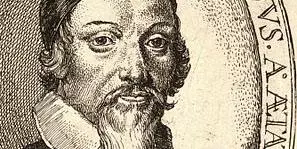
Jan Amos Comenius (1592–1670)