

John Aubrey (1626–97)
John Aubrey (1626–97) was one of the foremost gatherers and disseminators of learning in late seventeenth-century England. The author of the celebrated Lives, Aubrey was also a pioneer of archaeology and antiquarianism, and was a member of the fledgling Royal Society. In describing himself to others, he often quoted a line taken from Horace: ‘I perform the function of a whetstone, which can make the iron sharp though is itself unable to cut’.
Aubrey was too modest, but one of his greatest contributions to intellectual history meets exactly this description: namely, the extraordinary body of correspondence that he accumulated and would bequeath to the Ashmolean Museum (which in turn passed it to the Bodleian Library in 1860). His correspondents ranged from philosophers like Hobbes and Locke, to scientists such as Newton, Wren, Hooke, Petty, and Halley, to literary figures like Thomas Browne and Henry Vaughan, to antiquarian scholars such as Edward Lhwyd and Elias Ashmole. Furthermore, their social and geographical diversity attests that early British ‘science’ was as much the province of Somerset, Merioneth, or Yorkshire as it was of Oxford, Cambridge, or London.
Aubrey’s range of epistolary acquaintance is remarkable enough, but is overshadowed by the variety of subjects that he and his correspondents discussed. Writing from 1654–96, they chewed over aspects of alchemy, architecture, mechanics, mathematics, natural history, educational reform, artificial language planning, archaeology, topography, politics, local history, philosophy, and church governance – to say nothing of horticulture, musicology, and astronomy. Yet Aubrey’s letters are also unusually alive, and give us a colourful picture of what it was like to live and write in late seventeenth-century England. This is because Aubrey was at least as animated by gossip as he was by ideas, something vividly demonstrated in the correspondence he exchanged with the historian Anthony Wood. This formed the basis for the first monument of English national biography (the Athenae Oxonienses), and comprises the largest single portion of the letters as they now survive.
Rationale for Inclusion
Despite the importance of Aubrey’s letters, they have not been studied in any depth and have generally been overlooked by scholars in related fields. This is because more than eighty-five percent of them have never been edited or published, something that counts as one of the great oversights of early modern intellectual and literary history. Of around 845 extant letters sent to or from Aubrey, at least 810 are now housed in the Bodleian Library, chiefly within the Aubrey, Wood, and Ashmole manuscript collections. Under the editorship of Kate Bennett, Rhodri Lewis, and Will Poole, Cultures of Knowledge proposes fully to exploit these holdings for the first time, producing a four-volume scholarly edition of the letters, a digital catalogue, and an associated doctoral thesis.
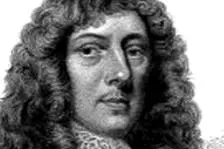
The Correspondence of John Aubrey
Primary Contributors:
Rhodri Lewis, William Poole, and Kelsey Jackson Williams