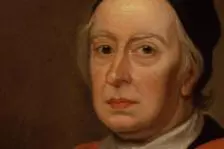

John Wallis (1616–1703)
John Wallis (1616–1703), Savilian professor of geometry in Oxford from 1649 until his death 54 years later, is today renowned as one of the leading mathematicians of the seventeenth century. Yet in a manner characteristic of the time, his interest and accomplishments spread far wider.
He acted as secretary to the reforming Assembly of Divines in the 1640s; acquired fame as a cryptanalyst during the civil wars; was a founding member of the natural philosophical circle in Oxford during the Commonwealth and the Royal Society at the Restoration; and controversially held the post of keeper of the university archives jointly with his mathematical chair. Alongside important mathematical works, his publications include major treatises on ancient and modern music theory, a pioneering grammar of the English language, and the foremost survey of logic produced in Britain during his lifetime.
His correspondence was equally wide-ranging geographically and thematically: he engaged in public dispute with a range of figures including Hobbes, Holder, Fermat, and Roberval, and corresponded with leading scientific luminaries such as Boyle, Newton, Leibniz, Huygens, and Flamsteed, as well as scientific amateurs, theologians, and members of government. His roughly 2,000 extant letters, exchanged with astronomers, mathematicians, philosophers, and linguists throughout Europe, document his role not only as a key figure in the international Republic of Letters itself, but also in establishing Oxford as an important hub within that broader network after a period in which it had been marginal to European intellectual affairs. He thus represents a contrasting institutional setting which gave rise to cultures of knowledge instructively different to those fostered by the networks of Aubrey, Hartlib, or Comenius. Wallis’s correspondence also provides a crucial link between the earliest English correspondence network surrounding the Prussian-born Hartlib and the domestication of this kind of networking activity by the era of Aubrey.
Rationale for Inclusion
Wallis regarded scientific correspondence as an important record of intellectual developments, and therefore published some of his own letters during his lifetime. More recently, a number have been published in modern editions of the letters of his most important scientific contemporaries. Yet the overwhelming majority of his letters remain in manuscript and are virtually unstudied. The Bodleian Library contains the largest manuscript holdings of Wallis’s communications as well a huge range of related material, including his lecture notes from the 1650s; drafts of numerous publications; originals and copies of many of the papers which he deciphered from the 1640s onwards; and notes on books by other authors, as well as his marginalia in books which were or became part of the Savilian Library itself. Hundreds of additional letters, the existence of which has hitherto gone unnoticed, have recently been discovered in the University Archives, throwing fresh light on academic life and university politics throughout his Oxford career. In response to this situation, Philip Beeley and Christoph Scriba have already started work on a scholarly edition of Wallis’s correspondence, two volumes of which appeared with OUP in 2003 and 2005. This work will be continued and consolidated under the Cultures of Knowledge umbrella.